Bookmaker Sponsorship Withdrawals Reshape British Racing Funding Landscape
Logan Schwarz · Oct 7, 2026

Bookmaker Sponsorship Withdrawals Reshape British Racing Funding Landscape
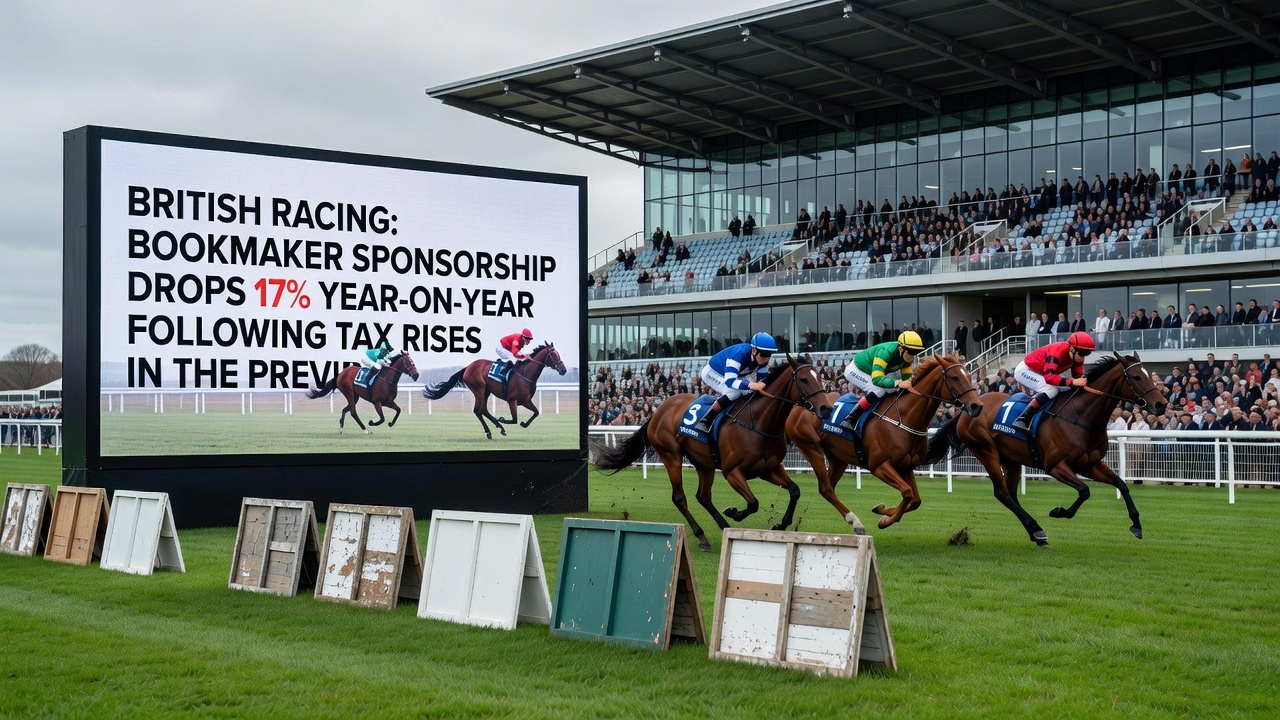
Data from the past year reveals a 17% year-on-year drop in bookmaker sponsorship within British racing, triggered directly by tax increases introduced in the previous budget, and major operators including bet365, Betfred, Flutter along with Unibet have scaled back commitments substantially. One prominent example shows bet365 reducing its sponsorship activity by 77% in certain areas, while the combined effect has produced a 2.5% decline in prize money for sponsored races, which equates to a 5.5% reduction once inflation is factored in. All-weather fixtures absorbed the largest share of these cuts, and industry projections now point toward further strain if Machine Games Duty rates rise again.
Tracking the Sponsorship Contraction Across Operators
Figures compiled over the previous twelve months document how several leading betting firms pulled back from race sponsorship agreements, with the overall reduction reaching 17% compared with the prior period. bet365 recorded the steepest individual decline at 77% in select sponsorship categories, while Betfred, Flutter and Unibet each trimmed their involvement by double-digit percentages. These reductions occurred after tax adjustments in the last budget increased the cost of operating in the sector, prompting companies to reassess marketing budgets allocated to racing. The pattern appears consistent across both national and regional fixtures, where naming rights and branding deals previously formed a reliable revenue stream for racecourses.
Prize Money Adjustments and Regional Variations
Sponsored race prize money fell 2.5% in nominal terms and 5.5% after inflation adjustments, reflecting the direct link between reduced sponsorship income and the funds available for distribution to participants. All-weather racing experienced the most pronounced impact, with multiple meetings reporting lower purses and some fixtures facing outright cancellation or consolidation. Flat and jump racing on turf saw smaller but still measurable shortfalls, particularly at tracks that had relied heavily on bookmaker-backed events. Observers note that the timing of these cuts coincides with broader economic pressures, yet the data isolates the budget tax changes as the primary driver behind the sponsorship retreat.
Potential Machine Games Duty Increases and Betting Shop Outlook
Industry analysis referenced in recent coverage warns that any additional rise in Machine Games Duty could accelerate the closure of hundreds more betting shops across the country. Each closure removes a direct funding channel that historically supported racing through the betting levy and associated contributions. The report links these projected closures to further losses in sponsorship and levy income, creating a compounding effect on prize money pools. Current data already shows the initial 17% sponsorship drop feeding into measurable reductions at the track level, and stakeholders are monitoring legislative developments that could intensify this trend.
Responses from Racecourses and Industry Bodies
Racecourse operators have begun adjusting fixture lists and exploring alternative commercial partnerships to offset the shortfall, although replacement revenue streams have not yet matched previous bookmaker commitments. Industry representatives have highlighted the concentration of cuts within all-weather racing and called for data-driven assessments of how future tax policy might affect long-term sustainability. The Racing Post coverage, available here, provides detailed breakdowns of operator-level changes and their downstream effects on individual meetings.
Conclusion
The documented 17% decline in bookmaker sponsorship, combined with specific operator reductions and resulting prize money adjustments, illustrates the immediate consequences of recent tax rises on British racing finances. All-weather racing carries the heaviest burden so far, while the prospect of higher Machine Games Duty adds further uncertainty around betting shop viability and associated funding streams. These developments remain under active review by participants across the sport as they adapt to the altered commercial environment.